Beverly and Morgan Park Residents Launch Campaign to Stop Loss of Street Trees
Neighbors on Chicago's Southwest Side say healthy trees are disappearing from parkway strips and are teaming up with an environmental group to push for protections and replanting.
By Ken Adams ·
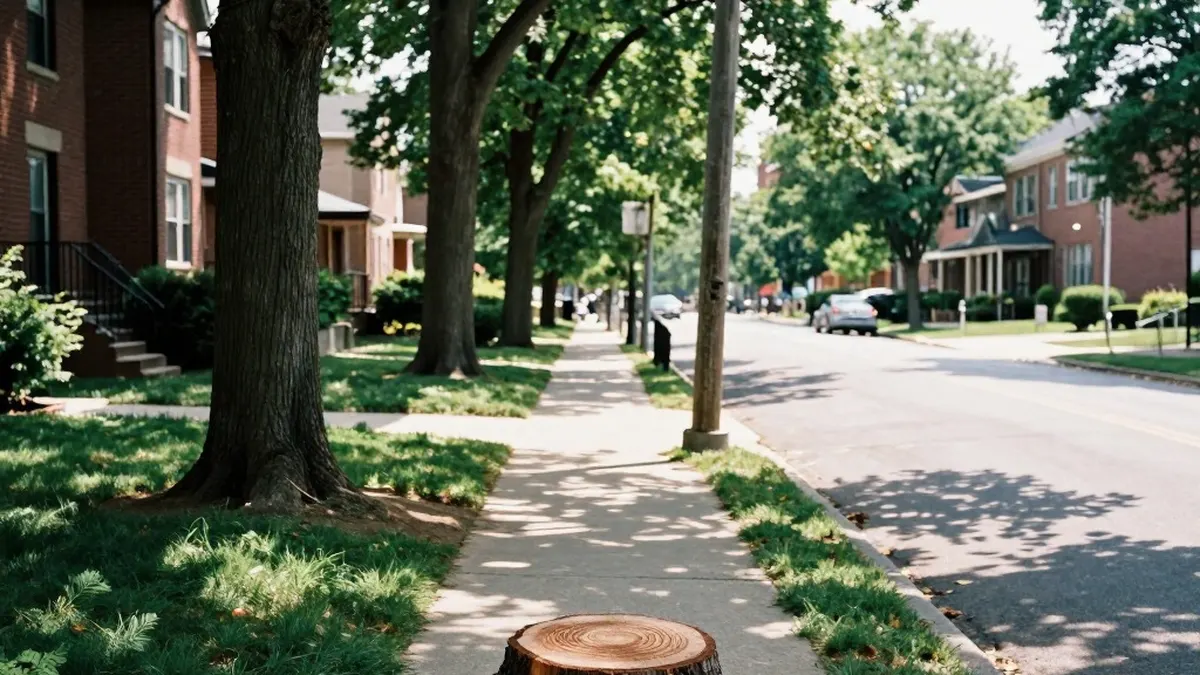
Residents of Chicago's Beverly and Morgan Park neighborhoods say they are alarmed by the number of trees being cut down in the parkways, the strips of land between sidewalks and streets. At a community meeting last week, many described a growing sense of frustration over the losses and the city's explanations for them.
"The loss of shade has made sidewalks so hot, dogs can't even walk on them, they have to walk on the grass!" said MaryJo Viero, executive director of the Beverly Area Planning Association. Others at the association's headquarters on West 99th Street said their homes have grown hotter, their utility bills have risen and they are worried about climate change. Some said mature trees and healthy younger ones are being removed with no clear reason, often without notice, leaving residents to return home to stumps or badly cut trees. A few reported seeing ComEd crews removing trees that were not near power lines.
The session came 16 days after Malcom Whitehead, a deputy commissioner with Chicago Streets and Sanitation, and Joe McCarthy of the Forestry Department spoke with many of the same residents on June 7. Residents said Whitehead linked the removals to the department's work on orders backlogged during the pandemic and said only diseased or damaged trees were being taken down. Viero said that account does not match what neighbors are seeing. Healthy trees came down on her own block, she said, while dead ones remain standing despite assurances that trained arborists are involved.
Viero raised similar concerns in an April message in the association's Villager newsletter. She acknowledged the city must remove unhealthy trees but questioned apparently needless removals, slow stump grinding and a lack of replacement planting. She said the piece drew more responses than anything else she has written in two and a half years in the job.
City records show the Department of Streets & Sanitation removed 1,116 trees from the 19th Ward, which includes both neighborhoods, over the past five years. The department had difficulty confirming 2022 removals so far, but as of May 24 another 358 trees in the ward were scheduled to come down.
Residents have personal reasons for getting involved. Lisa Vinci of Beverly said she joined after seeing many stumps on streets lined with oaks, maples, elms, sycamores and other trees, and she worries about children and property values. Jessie Carroll, who moved to the area around Memorial Day 2021, said she has counted stumps with 127 rings. That prompted talk of whether some older trees might qualify for historic protection.
Daniella Pereira, executive director of Openlands, which works to grow and maintain the region's urban tree canopy, pledged to help the association's Save the Trees group draft a plan to protect healthy trees, speed up stump removal and support new plantings. Citing differences in canopy between wealthier white communities and communities of color, she suggested the group partner with a more diverse neighborhood to qualify for an Openlands grant. Such funding could pay for tree-care education, new trees, and help from arborists with planting and city permits.
The group faces obstacles. Whitehead told residents they cannot block a removal once the city decides a tree should go, because of liability concerns. Pereira noted that the Water Department removes trees without a formal health evaluation, and ComEd can remove trees near power lines. Aldermanic privilege can also come into play: if a resident's removal request is rejected because arborists find the tree healthy, the alderman can sign off on it anyway.
Pereira suggested the group ask 19th Ward Ald. Matt O'Shea to work with tree-friendly colleagues such as 32nd Ward Ald. Scott Waguespack. She said aldermen were limited to ordering 20 removals a year in their wards during the Richard M. Daley administration, which helped protect the canopy. She also called for an overarching city policy so other departments are held to account if the mayor seeks to plant 75,000 trees, a step that would involve activating the forestry advisory board proposed by Mayor Lori Lightfoot.
Source: Chicago Tribune