As Nike and Lululemon lose ground in China, Xiaohongshu fuels the rise of local brands
Chinese upstart labels are using the lifestyle app Xiaohongshu and founder-led storytelling to win over consumers, even as retail sales stall and some Western brands report declining China revenue.
By Bianca Thompson ·
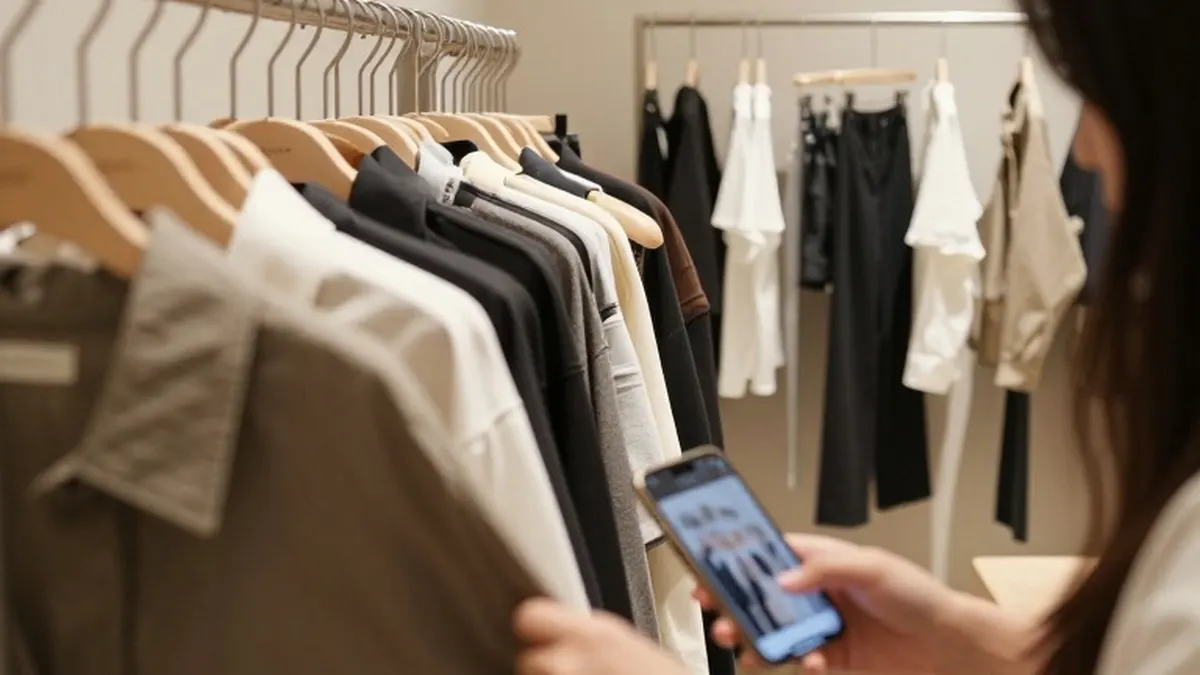
While global attention focused on Nvidia's China saga, Chinese retailers quietly closed out Singles Day, the country's answer to Black Friday. The shopping festival offered fresh evidence that a wave of homegrown brands is gaining ground on foreign rivals.
Labels with English names such as Monday Sleeping Club, Crying Center, AW Project, an action a day and Liegee have multiplied rapidly, even as nationwide retail sales have flatlined. Their ascent highlights a formula that Western consumer brands expanding in China have struggled to replicate.
"Their success rests on one shared formula," said Cynthia Zhang, an analyst at Euromonitor International. "Build a non-product asset first, credible fabric quality, an emotion, an aesthetic reputation, or proprietary fit data, then monetize it through founder-led content, Xiaohongshu-driven discovery, tight supply chains, and the quiet-luxury and Guochao mood that prizes craftsmanship over conspicuous logos."
Liegee offers a case study. One of its three founders, Cocoa Lin, said sales surged roughly 160% during the latest Singles Day period, reaching tens of millions of yuan, the equivalent of a few million U.S. dollars. The brand launched in Hangzhou in 2022 to fill what it saw as a gap in clothing for early career women seeking to express their personality. Its Taobao store now counts more than 100,000 fans, built largely through internet influencers and celebrity product seeding.
On Xiaohongshu, where Liegee has over 22,000 followers, the brand posts catalog-style photos and marketing videos. Last month it opened a "Liegee Motel" pop-up in Shenzhen. "We believe online and offline will have a closer connection in the future," Lin said in Mandarin via translation, adding that as lifestyles become more experience-oriented, "this energy can be transmitted to online."
That online-offline dynamic has proven difficult for some Western players. Nike reported a 22% sales decline in Greater China in the quarter ended Aug. 31, while Lululemon posted a 2% drop in mainland China comparable sales in the quarter ended Aug. 2. Adidas, by contrast, recorded a 20% increase. The German company runs at least six official Xiaohongshu accounts, two of which have well over 200,000 followers each. Nike and Lululemon each operate a single official account, each with more than 300,000 followers.
Xiaohongshu, a social media app whose layout blends Instagram and Pinterest, has captured a key consumer audience in a country of around 1.4 billion people. It has traditionally focused on women and young people in China's largest cities and has recently expanded into less developed regions, according to Questmobile. The app averaged 120 million daily users in October, well below Taobao's 422 million and Douyin's 717 million, the report showed.
The platform has also been building its own e-commerce business to monetize its influence. "RedNote has been a key platform for product discovery and research, especially for female consumers shopping in the beauty, skincare, lifestyle, fashion, and health categories. Now, we're seeing more transactions within RedNote itself," said Jacob Cooke, co-founder and CEO of WPIC Marketing + Technologies, which helps foreign brands sell in China and elsewhere in Asia. Alibaba, JD.com and ByteDance's Douyin still dominated this year's Singles Day, racking up a combined 1.68 trillion yuan in sales between Oct. 7 and Nov. 11, according to Syntun.
Underpinning the shift is a deeper change in consumer attitudes, including among wealthier shoppers. During years of double-digit growth in real estate prices, consumers pursued conspicuous consumption to satisfy aspirational desires, Christine Peng, head of Greater China consumer research at UBS, told reporters last week. "Now those needs no longer exist," she said in Mandarin. "The rise of these trendy brands reflects how consumers now seek to define their own identities and pursue personal enjoyment, while still remaining mindful of price and quality." Peng added that affluent consumers are also embracing domestic brands rather than buying only traditional luxury labels.
More News · National news · Report a business · Got a Story?