Israeli Election Billboards, Tourism and Property Purchases Reshape Cyprus Debate
A surge in Israeli visitors, investment and home buying in Cyprus has sparked unease among locals, who say the changes are arriving at a politically sensitive moment.
By Hot Report Digest Staff ·
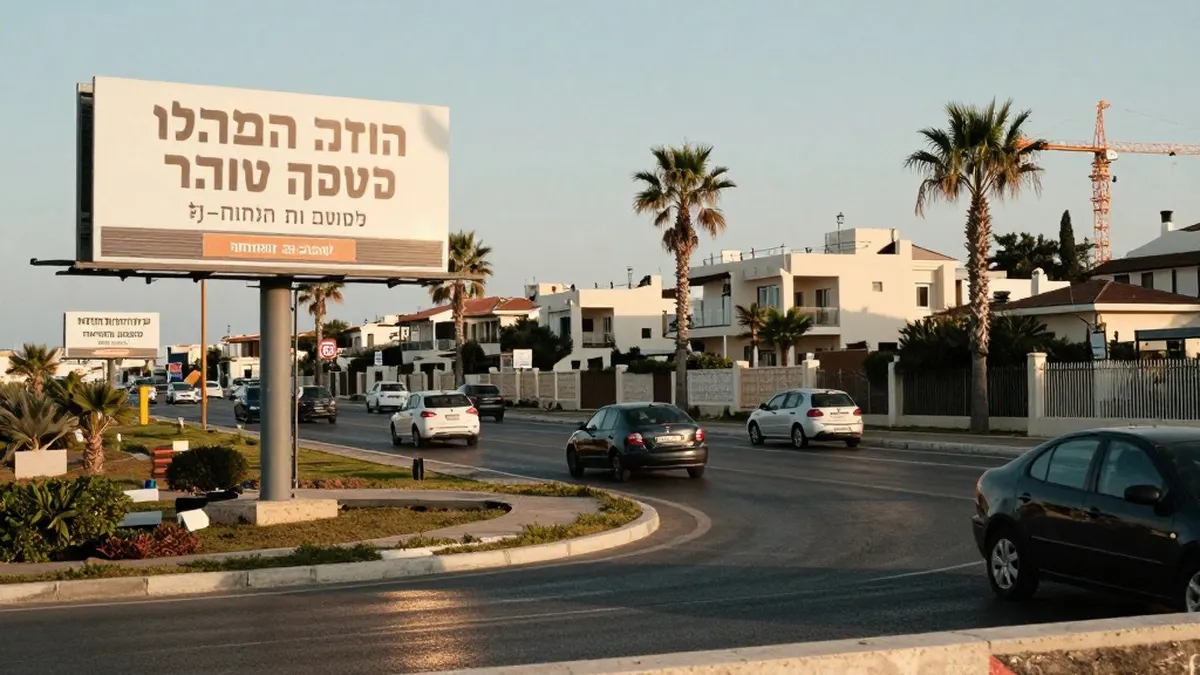
A billboard near Larnaca airport this summer greeted holidaymakers in Hebrew with the message: "Israelis, enjoy! Now come back and win!" It was an election poster for Israel's October 27 vote, featuring Gadi Eisenkot, a former army chief and the leader of the opposition Yashar Party. It is believed to be the first time a foreign politician has campaigned on billboards in Cyprus.
TV presenter and pro-Palestine activist Melanie Steliou told Al Jazeera the poster reflects the growing number of Israelis living on and visiting the island. Israel is only 40 minutes away by plane, she said, so people "can pop over, vote, and come back within the day." Israel does not let most citizens abroad vote from overseas, so campaigns target those who can fly home on polling day. Steliou said it shows how Israeli politicians view Cyprus as "just another district of Israel."
Political ties are also growing. On October 20, six Cypriot lawmakers formed a pro-Israel caucus launched by the advocacy group Israel Allies Foundation, according to The Jerusalem Post.
The numbers are striking. Israelis made nearly 600,000 trips to Cyprus last year, more than double the 2022 figure, according to the Cyprus Statistical Service. In August, almost one in four arriving tourists was Israeli, up 28.4 percent from 2025. In the 12 months to September 2025, Israelis made 850 property purchases in Larnaca district, more than any other foreign nationality, per Interior Ministry data. Israel's embassy in Nicosia estimates 15,000 to 20,000 Israelis consider the island home, while the 2021 census counted slightly more than 1,000. Investment from Israel rose more than sixfold between 2017 and 2024 to 5.1 billion euros, the Central Bank of Cyprus says, even as total foreign investment fell by a quarter between 2022 and 2024.
Cyprus has seen foreign buyers before. Limassol was once nicknamed "Limassolgrad" for its Russian community. But historian Theodosis Pipis of the think tank KEDISA said Russian money brought big buildings without a major push to buy houses, build schools or create communities. Israeli investment, he said, is creating "a sense of community for the future." Nasia Hadjigeorgiou, an associate professor at the University of Central Lancashire in Cyprus, said British and Lebanese buying came "almost naturally," while the Israeli push was "more sudden." She added that Nicosia's support for Israel's government, amid the war in Gaza, makes part of the population uncomfortable.
Tensions have surfaced. Steliou showed videos of a diner at an Israeli-owned restaurant trying to attack protesters at a pro-Palestine march, and of an Israeli man vandalising a mural honouring Gaza's children. Locals also voiced discomfort. Artist Giorgos Kyrou, 32, said his heart sinks seeing large groups of Israeli men who served in the military buy property, while potter Ioannis Nestoras said Cypriot politicians are "compromised."
Many describe so-called gated communities of Israeli-owned property, though no official count exists and buyers' nationalities are not recorded when purchases go through Cypriot companies. Stockwatch reported that Israeli companies bought most of the coastline between Livadia and Pyla near Larnaca, and that a large residential development in Dromolaxia-Meneou is being promoted with its own kindergarten, pools and private park. In Polemidia, the Yael Foundation is funding a Jewish school for up to 1,500 pupils, due to open in 2027. Kathimerini reported that as late as October last year the application was still being finalised, and that the municipality said it was not consulted. Hadassah also opened its first European medical centre in Limassol in July.
AKEL leader Stefanos Stefanou said in June 2025 that areas were being bought en masse, creating communities almost inaccessible to anyone but Israelis, and denied xenophobia or anti-Semitism. Israel's former ambassador, Oren Anolik, said the remarks singled out the Jewish community. Hadjigeorgiou said some examples may be exaggerated but others are clearly gated, and that a development open only to Israelis "is unconstitutional." In Trozena, businessman Uriel Kertesz, who holds Hungarian and Israeli citizenship, bought an estimated 70 to 80 percent of the abandoned village, which lies in a protected area, according to journalist Yiannis Pazouros. Al Jazeera could not independently confirm his claims that Kertesz overpaid and lacked permits.
Not all encounters are hostile. Israeli-American comedian Mike Kroll, who performed at a Limassol festival in October, said he felt respected and engaged in deep discussions. Still, graffiti such as "Zionists not welcome" appears in Larnaca. After Israeli minister Amichai Chikli complained in August 2025, the Interior Ministry ordered municipalities to remove what it called hate-inciting graffiti. Hadjigeorgiou said Cypriots, displaced themselves in 1974, find the changes especially weighty.
Source: Al Jazeera