Tesla Sets Late 2027 Target for Robot Shipments
The automaker has pushed back its external delivery schedule, citing unresolved issues with the robot's hands and durability.
By Thomas Reynolds ·
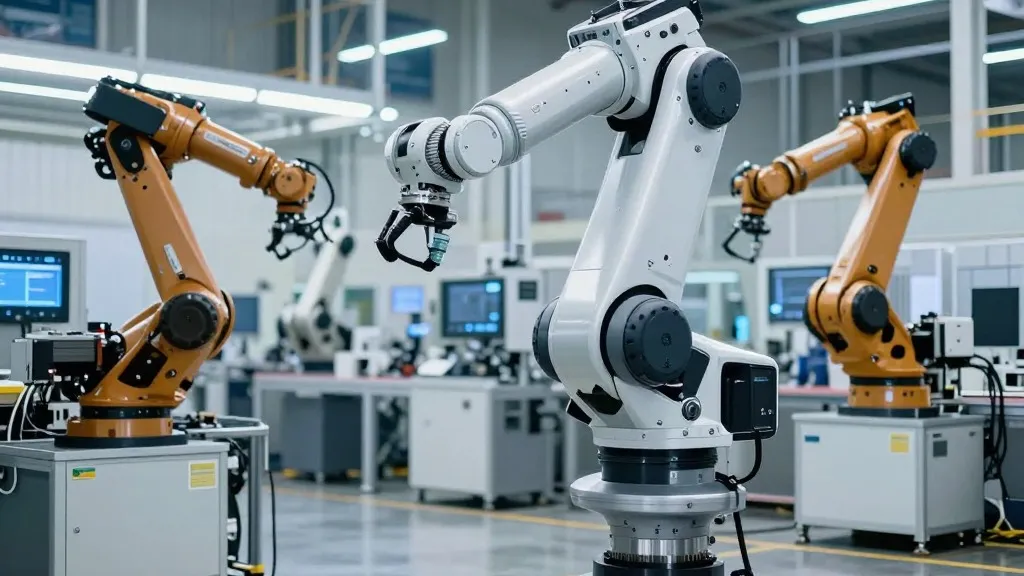
Tesla has indicated it will begin delivering its Optimus humanoid robots to external clients by the end of 2027. On the company’s third-quarter 2026 earnings call, Chief Executive Officer Elon Musk stated that significant technical hurdles remain before the machine is ready for widespread commercial use. Specifically, he identified the robot’s hands, overall durability, and artificial intelligence capabilities as the primary areas requiring further development.
The path to this current timeline has been marked by repeated adjustments. In 2024, the company projected internal usage for 2025 and high-volume external sales for 2026. By January 2025, expectations had shifted to producing 10,000 units in that year, with several thousand performing useful tasks by year-end. Musk later acknowledged that none of the units had achieved that level of utility. Now, the target for external deliveries has moved to late 2027, reflecting a more cautious approach to the technology’s readiness.
Production of the Optimus has already begun on a high-volume line at Tesla’s Fremont facility, where Model S and Model X vehicles were previously manufactured. While most of the infrastructure for a potential one-million-robot annual capacity is installed, Musk noted that reaching a rate of 20,000 units per week will likely take at least a year, possibly longer. This delay is attributed to ongoing changes in the design, particularly in the electromechanical components and reliability systems necessary to prevent wear-out after just a month of operation.
During the call, a Tesla engineer highlighted the robot’s hand as one of the most difficult hardware challenges. The fingers must be soft enough to handle delicate objects yet durable enough to withstand constant use, a difficult balance given that robots cannot heal like human skin. Custom gears also remain a source of reliability concerns. On the software side, the company is still refining its AI architecture. Because Tesla lacks a fleet of robots to collect data in the same manner as its cars do for its self-driving feature, it plans to build 10,000 to 20,000 units for an internal training program known as the Optimus Academy. The AI5 chip is expected to be integrated into the robots around April 2027.
Musk also promised a video within the next one to two months demonstrating the robot performing tasks that are not pre-programmed. He argued that many existing demonstrations rely on scripted routines that would not hold up in real-world conditions. The company’s Q3 shareholder letter described the units coming off the Fremont line as the first production-quality bots manufactured by Tesla, implying that previous iterations did not meet this standard.
Competitors are also advancing their own humanoid technologies. XPeng activated an automated production line for its IRON robot in Guangzhou in September, with plans for mass production by the end of 2026 and deliveries in the first half of 2027. Meanwhile, Boston Dynamics began producing its electric Atlas in January and has committed all 2026 deployments, including to Google DeepMind. The company opened a training center at Hyundai’s Metaplant in Georgia in September, where Atlas is learning to sequence car parts. Hyundai intends to deploy 25,000 robots across its plants in the coming years.
Musk stated on the earnings call that, to his knowledge, no other company is close to Tesla in developing a general-purpose humanoid robot. However, the progress made by XPeng and Boston Dynamics suggests a more competitive landscape. While Tesla may have built the most robots, the industry faces the same core challenge: creating machines that are reliable enough to perform useful work consistently. The difference lies in the fact that Tesla’s competitors are not claiming a lack of competition while navigating these similar technical barriers.
The next phase for Tesla involves solving the issues of AI generalization and mechanical reliability. The company aims to address these problems by the end of next year, at which point it expects to start delivering Optimus to industrial customers. These initial deployments will focus on jobs that are dangerous, repetitive, or require operation around the clock. Success in this phase will depend on whether the robot can handle new tasks without extensive retraining, a capability that remains elusive for the entire sector.
Source: Electrek