Yosemite Winter Storm: 16 Inches of Snow Forecast Through Tuesday
The National Weather Service warns of hazardous travel conditions and gusty winds across six high-elevation areas in the Sierra Nevada.
By Enzo Melnyk ·
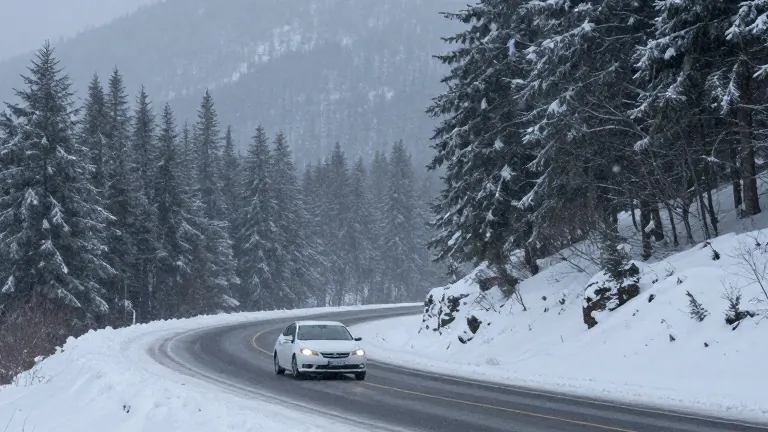
Drivers in the Sierra Nevada face potentially impassable roads beginning Friday afternoon as the National Weather Service issues a winter storm warning for Yosemite and surrounding high-elevation areas. The alert, released at 5:19 a.m. on Thursday, remains active until 4 a.m. on Tuesday, Nov. 17. Meteorologists project total snow accumulations of up to 16 inches for the affected region.
The warning covers Yosemite, the Upper San Joaquin River, the stretch from Kaiser to Rodgers Ridge, Kings Canyon National Park, the Grant Grove area, and Sequoia National Park. The NWS Hanford office describes the expected impacts as widespread and moderate, citing wind gusts that could reach 50 mph. These conditions will affect the Friday evening and Monday morning commutes, making travel difficult or impossible for many motorists.
Hazardous conditions include slick roads, bridges, and overpasses. Gusty winds pose a risk of fallen tree branches. The agency advises that persons consider delaying all travel. If travel is necessary, motorists should use extreme caution and keep an extra flashlight, food, and water in their vehicles. Callers can obtain the latest road conditions by dialing 5 1 1.
Emergency alerts will be sent to all enabled mobile phones in the area for considerable or catastrophic hazards. Residents monitoring lesser risks are advised to sign up for county alert systems and follow local agencies on social media. The NWS notes that winter weather leads to over 6,000 vehicle fatalities and 480,000 injuries annually in the United States.
Safety guidelines for drivers include slowing down and assuming icy conditions exist in near-freezing temperatures. Travelers should avoid routes with heavy tree and power line coverage to reduce the risk of falling hazards. If a downed power line is encountered, drivers should not touch it and should dial 911 immediately.
Before departing, drivers should inform family or friends of their destination, route, and estimated arrival time. Vehicles should have a full gas tank and carry winter supplies, including a scraper, jumper cables, shovel, flashlight, blanket, warm clothing, water, and high-calorie food. If stranded, occupants should stay with the vehicle, signal for help with a cloth on the antenna, and use dome lights and flashers to increase visibility.
Drivers must also watch for snow plows and allow them ample space to pass. Overtaking a plow is safe only when the road ahead is clearly visible. The NWS recommends checking road conditions before every journey to make informed travel decisions during the storm.