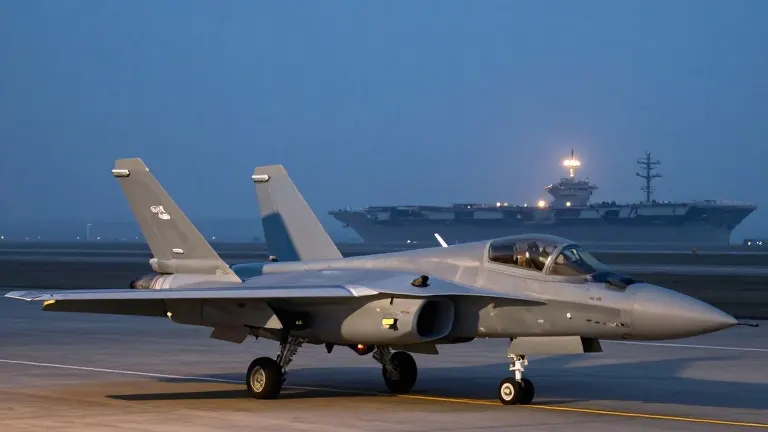
Judge permits supplemental complaint in seven-year Growler noise lawsuit
Federal Judge Richard Jones ruled that Citizens of Ebey’s Reserve may challenge the Navy's December 2025 environmental analysis within the existing case.
By Bianca Thompson ·

U.S. District Judge Richard Jones ruled on November 3 that Citizens of Ebey’s Reserve and Coupeville resident Paula Spina may file a supplemental complaint against the Navy’s environmental review of expanded jet operations. The decision allows the plaintiffs to proceed with their legal challenge to the latest analysis without starting a new lawsuit.
The dispute concerns the Navy’s December 2025 amended analysis regarding EA-18G Growler operations at Naval Air Station Whidbey Island. The plaintiffs argue that the Navy failed to correct four specific violations of federal environmental law that Judge Jones identified in a 2022 ruling. The Navy maintains that the new analysis addresses these deficiencies and that the litigation should conclude following a final judgment.
The 86-page document acknowledges that noise from Growler flights impacts childhood learning at local schools. The Navy concluded that reducing flight operations during academic testing periods would partially mitigate negative effects on test scores. According to the analysis, Crescent Harbor Elementary School faces the greatest noise exposure, which could result in a one-month delay in reading comprehension for students.
The analysis also indicates that students at Crescent Harbor Elementary and Coupeville Elementary could suffer negative impacts on long-term memory, reading comprehension, math test scores, and failure rates. Citizens of Ebey’s Reserve contends that the analysis still does not adequately address effects on classroom learning at Coupeville High School and Coupeville Middle School.
The group also disputes the Navy’s conclusions on greenhouse gas emissions, bird impacts, and the potential relocation of operations. The Navy stated that increased emissions would be nominal and that bird disturbances would be brief and intermittent. COER cites concerns from the Washington Department of Fish and Wildlife regarding common loons and tufted puffins and argues the Navy did not align its emissions evaluation with state and county reduction goals.
The lawsuit dates to 2019, when the group and the state Attorney General’s Office challenged the Navy’s environmental review. The original impact statement preceded the Navy’s decision to add 36 Growlers to the base and quadruple touch-and-go training at Outlying Landing Field Coupeville. In 2022, Judge Jones found the Navy violated the National Environmental Policy Act in four areas but allowed expanded operations to continue while the Navy conducted additional analysis.
The Navy opposed the supplemental complaint in March, arguing that COER needed to reopen the final judgment first. Attorneys also claimed the group failed to attach a proposed complaint and did not preserve its right to challenge certain aspects of the analysis. Jones rejected these procedural arguments, noting that the court retained jurisdiction to ensure compliance with its earlier orders.
The judge limited the scope of the supplemental complaint to whether the Navy corrected the four deficiencies identified in 2022. The ruling prohibits new parties, previously dismissed claims, and unrelated challenges. This decision does not determine whether the Navy’s amended analysis complies with federal law.