Vernon Council Weighs New Rules for Data Centers
A city council vote on December 15 could require environmental reviews for new facilities, marking a shift in the city's long-standing pro-industry stance.
By Bianca Thompson ·
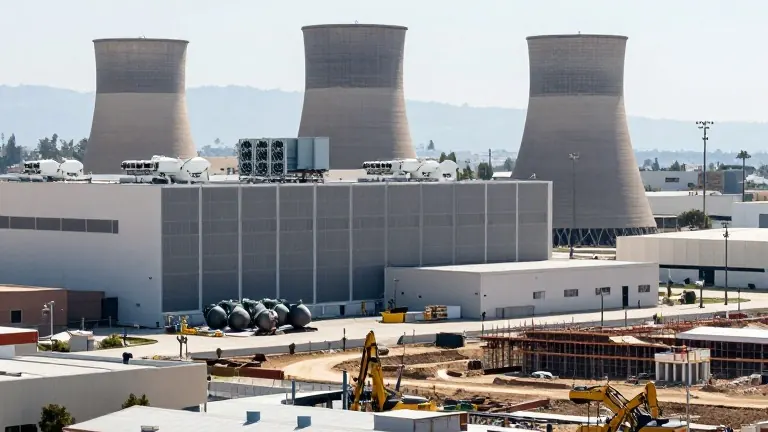
Vernon City Council members will vote on December 15 to determine whether new data centers must undergo formal environmental review. This decision would mark a major departure from the city's long-standing policy of allowing most industrial development by right without such scrutiny. A public hearing is scheduled for November 17 to discuss the proposal. If approved, the change would override the recommendation of the city's own Business and Industry Commission.
Vernon, located just south of downtown Los Angeles, has become the primary location for new data center construction in the greater L.A. area. Approximately 50,000 people commute to the city daily for work, while only about 300 residents live there. The city has actively courted these facilities, with one data center currently operating and five more in various stages of development.
The push for regulation stems from growing concerns about the strain these facilities place on local infrastructure. City staff cited issues related to electric grid demand, water usage, noise from backup generators, and air emissions. Marisa Olguin, president of the Chamber of Commerce, stated at a recent meeting that employers and residents are concerned and need more education regarding each development. Mayor Pro Tem Jesus Rivera added that the city needs regulations for these centers.
The first sign of this shift occurred last December when the city's public utility stopped processing new requests from data centers to connect to the grid. Data centers require 99.99% uptime, necessitating diesel backup generators that emit soot, nitrogen oxide, and carbon dioxide. The South Coast Air Quality Management District has approved 52 diesel generators for three data centers within a four-block radius. These generators are permitted to run for 50 hours annually for testing and during grid emergencies.
The Los Angeles Unified School District is actively opposing a specific project due to its proximity to Vernon City Elementary School. The district has requested that Vernon block the 217,800-square-foot Digital Realty project until it completes a full environmental review. Deputy Superintendent Pedro Salcido explained that the district seeks information on noise, generator pollution, and construction dust. The school serves 144 students with special needs, most of whom are Latino. Digital Realty spokesperson Richard Hartnett said the company has worked to communicate openly with stakeholders to identify ways to reduce potential impacts.
City spokesperson Diana Figueroa noted that the developer has requested 49 megawatts of power. Other pending projects include a 50-megawatt facility by CoreSite Real Estate and a 49-megawatt project by SCIND Fruitland Point LLC. Goodman Group has two large projects near the L.A. River. One nearly 50-megawatt project expects to start operating in February. The other, the 99-megawatt Goodman Energy Park, is seeking to exempt 40 diesel generators from state regulations, which would bring the city's total approved data center generator count to 92.
The Business and Industry Commission is split on the issue. Miles Solomon, an industrial realtor, advocated for treating Vernon like Loudoun County, Virginia, by imposing a new tax rather than permitting requirements. He called the situation a golden opportunity to capture new business. In contrast, Brian Baley, who manages the Pabco Paper plant, supported the zoning change to control the city's future direction. Vanessa Vasquez, a volunteer lawyer with Communities for a Better Environment, stated that the current approval process does not protect people's health.