Wildfire residue threatens U.S. drinking water for years
A record 9.5 million acres burned in 2026, leaving behind ash and organic matter that contaminate streams for up to eight years.
By Bianca Thompson ·
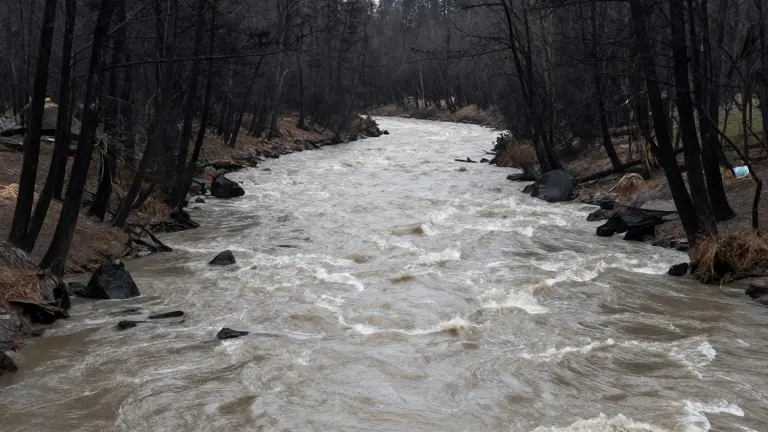
Wildfires burned more than 9.5 million acres in the United States in 2026, a record total that leaves scorched vegetation in the paths of streams and rivers. These waterways supply drinking water to a large portion of the country. New research indicates that the contamination left behind by these fires can persist in local water systems for more than a decade.
The scale of the problem has grown alongside climate change and stronger El Niño weather events, which intensify drought conditions. So far this year, 68,179 blazes have consumed the record acreage. When rain falls on these burned areas, it carries ash and organic matter into the water treatment plants that serve both towns and cities.
Carli Brucker, lead author of a University of Colorado Boulder study, noted that forested watersheds provide water to nearly two-thirds of U.S. municipalities. Her team assessed water quality in hundreds of burned basins and compared them to unburned areas. The study found that the impacts on water quality can last up to eight years.
Utilities are struggling to adapt because their facilities are not designed to handle the spikes in heavy metals and dissolved organic matter caused by fires. Amanda Hohner, an assistant professor at Montana State University, explained that the severity of recent fires has made watersheds, which normally filter and regulate water flow, vulnerable. Treatment plants often must shut off incoming water and seek alternative sources, which are not always immediately available.
Reservoirs can also face problems. Kyle Shimabuku, an assistant professor at Gonzaga University, said that sediments from burned vegetation are rich in nutrients like nitrogen and phosphorus. When these particles settle in still water, they can trigger algal blooms that make people sick and kill fish. Additionally, Garrett McKay of Texas A&M University pointed out that chlorine reacts with fire residue to form disinfection byproducts, which the Environmental Protection Agency regulates because they can cause illness.
Las Vegas, New Mexico, illustrates the long-term financial and logistical burden. After the 2022 Hermit’s Peak/Calf Canyon wildfire contaminated the Gallinas River, residents went without water for months. The city shipped in 2.2 million gallons of water from nearby towns and gave out bottled water. A 2024 flood and a 2025 pressure drop caused further disruptions, including a monthlong boil-water advisory.
State and federal governments allocated $148 million to rebuild the town’s treatment plant and explore other options like drilling wells. Mayor David Romero said the Gallinas River is no longer a dependable source. Groundbreaking for the first phase of the new water treatment plant is scheduled for Nov. 18.